Transparency and sustainability in the food chain
To feed seven billion mouths, something will have to change in the food & beverage supply change. Less waste in the food chain, less meat consumption, a return to biodiversity, more circularity in the food system and better utilization of plants and residual flows. The participants in ‘The round table meeting’ agreed on this. But what does this mean and how can we make this happen? Eight people involved talked to each other about these issues.
"*" indicates required fields
Our colleague Teroeska Boterkooper took part in this round table discussion which highlighted the importance of transparency within the chain. “There are many things in the chain that the consumer does not know. I would prefer to buy more sustainable clothing, but the chain is so opaque. You can’t hold the consumer responsible for that”, says Teroeska Boterkooper.
“On one hand we have a factory where we process chemicals and make cleaning products, and on the other hand we supply products and cleaning products to the food sector.” Synerlogic has had an intrinsic motivation for sustainability for years. “We are now in the process of developing our sustainability actions to a higher lever” . We initially focused on what we can do ourselves, but we are now looking much more broadly at what we can do with our partners in the supply chain to achieve even more together.” Circularity in the chain, Hilde Engels refers briefly to the waterlines in the ditch. “Circularity stands or falls with working cleanly, or pollution blocks circular work. When you have polluted water, you cannot scoop out the duckweed and consume i , apart from whether you want to do so for the sake of biodiversity. So you have to make sure the ditch water is clean first.” She also points to the crop protection agents. “If we didn’t use them, it would be much easier to use residual streams for food. So working cleanly is extremely important, because it really comes down to the design of the chain.” According to Franske van Duuren, legislation limits the possibilities of waste streams. She is programme manager for circular economy and early innovation at Kiemt, a foundation that promotes energy transition and the circular economy. “As soon as it is waste, you are not allowed to process it into food. FrieslandCampina, for example, extracts proteins from milk, but as soon as they are left over from production, they are residual flows; then it falls under the Waste Act and they are not allowed to process it into animal feed.”
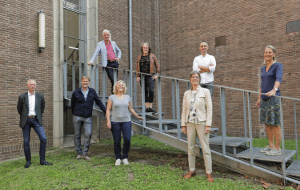
Curious about the whole round table discussion? Then read on the website of the Ondernemersbelang
"*" indicates required fields